
DRAIN AND SIMPLE: Your Home's Plumbing Is Sending Warning Signs

Most homeowners in Tucson and across Pima County picture a plumbing problem as something mysteriously painful but seemingly obvious. A burst pipe, water pooling on the floor, a ceiling stain that wasn't there yesterday. It's in the homeowner's natural instinct to jump directly to a conclusion, a loud conclusion, but more often than not the problem begins with something less obvious.
What Your Home Is Trying to Tell You
Let's take a drain that is taking a little longer than usual or a faint smell you can only catch in the powder room, laundry room, or a specific hallway. These are the moments most homeowners walk right past, not because they don't care but because nothing looks or feels broken yet.
Here's what's worth knowing. Your plumbing isn't a collection of separate fixtures that each do their own thing. It's one connected system. Your kitchen sink, your shower, your laundry machine, even that water heater in the garage, they all share pressure, flow, and drainage. So when something changes in one spot, it's rarely just about that spot. A slow drain in the bathroom and a gurgle in the kitchen aren't two small problems. They're one system telling you the same thing. Once you start seeing your plumbing that way, the signals get a lot easier to read.
Your Drains Are Clogged And Backing Up in Multiple Places

A single slow drain is usually not a big deal. Hair in the shower, grease buildup in the kitchen, a little bit of soap residue narrowing a bathroom pipe over time. You clear it, it drains, life goes on. But if you're noticing backups in more than one place around the same time, that changes the conversation. That's not a clog. That's your plumbing system flagging something further down the line, and it's worth understanding what that actually means before you reach for a bottle of drain cleaner.
One Slow Drain vs. Multiple Drains
If we are going to compare one slow drain against multiple drains or put one against the other, we must start with the understanding that both share one source of truth, the main sewer line.
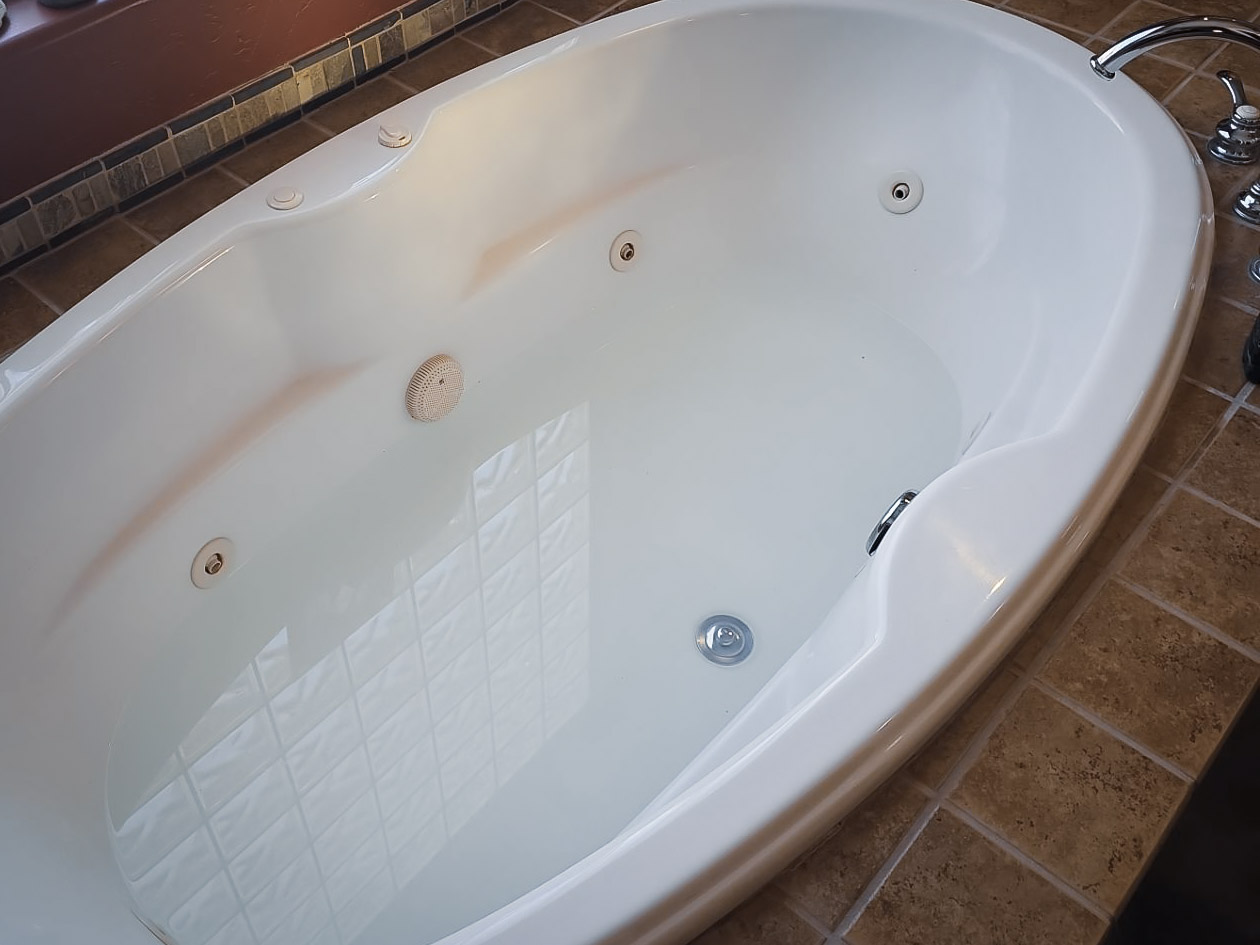
A single slow drain lives close to the fixture. Think the P-trap underneath your sink or that shower drain that's full of hair. The clogged drain is isolated, and usually reachable without much effort. A plunger or a drain snake often resolves it. Life goes on.
Multiple drains backing up at the same time is that same main sewer line telling a different story. When your bathroom sink is slow and your shower is gurgling and your washing machine is pushing water back toward the floor drain, those fixtures don't share a local pipe.
What Do Multiple Clogged Drains Usually Mean
When multiple drains in your Tucson home are backing up at the same time, the blockage usually is not sitting near one sink, toilet, shower, or tub. It is sitting further down in the sewer line. There is no cleaner way to say it. These are the honest truths of modern plumbing: one slow drain may be a fixture problem, but multiple slow or backed-up drains point to a larger drainage problem below the house.
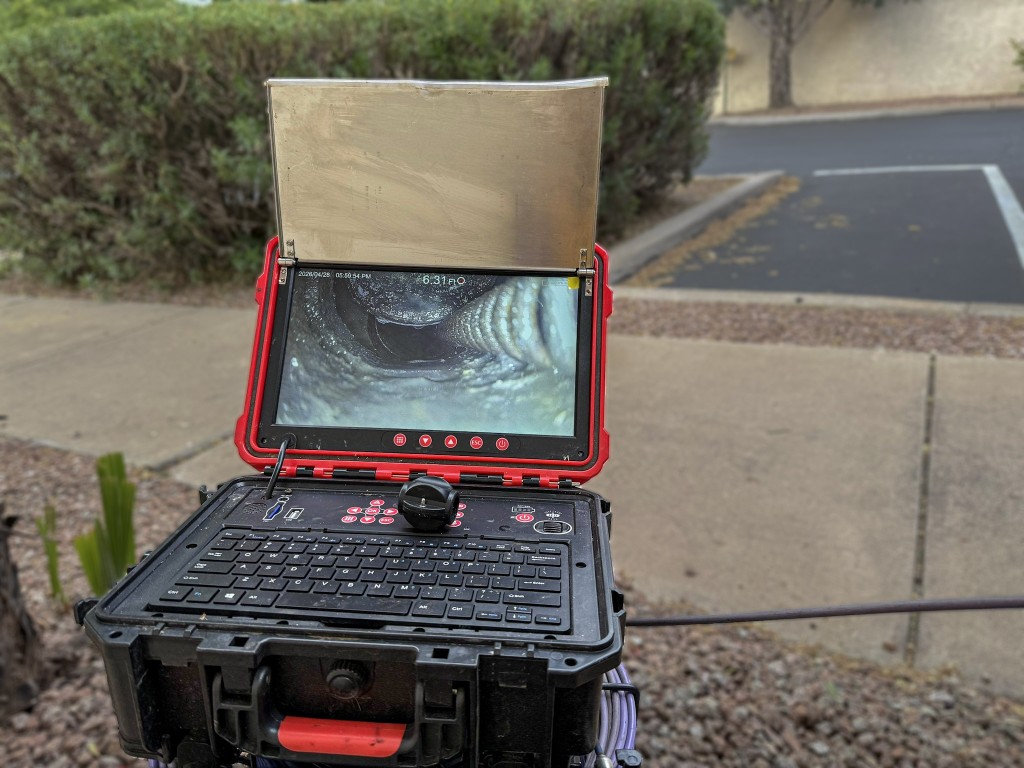
That matters because the sewer line is the main path that carries wastewater away from your home. When that line gets blocked by grease buildup, roots, collapsed piping, or years of debris, the water has nowhere normal to go. It starts showing up wherever it can: tubs, showers, floor drains, toilets, or lower-level fixtures.
For a Tucson homeowner, this is the point where plungers and store-bought drain cleaners stop being useful. The line needs to be inspected, cleared, and understood before the problem turns into sewage backing up inside the home.
Why Tucson Homes Are Especially Vulnerable
Tucson homes can be especially vulnerable because many sewer problems happen in the private sewer pipe between the house and the public sewer main, not inside the city main itself. Pima County says that private pipe is the property owner’s responsibility, including protection from roots, grease, and damage. That matters because once roots, grease, or debris get into that line, the whole home can start acting clogged at once. One toilet may seem like the problem, but the real issue may be several feet underground.
Tucson also has a mix of older homes, mature landscaping, desert soil, and hard water conditions. Older sewer lines are more likely to have cracks, loose joints, low spots, or rough interior pipe walls. Roots are drawn toward sewer lines because they contain moisture and nutrients, and the University of Arizona notes that some trees have aggressive roots that can damage underground utility lines, with sewer pipes being especially vulnerable.

Tucson’s soil can add to the problem, too. Caliche is common in the region, and the University of Arizona describes it as a cemented soil layer that can impair drainage.
Tucson Water also states that local groundwater is naturally hard, meaning it carries dissolved minerals like calcium and magnesium. That hard water is not the main reason a sewer line clogs, but over time it can contribute to residue and buildup inside a plumbing system.
For a new Tucson homeowner, the practical lesson is simple: multiple clogged drains are not usually a “bad luck” problem. They are often a warning sign that the main sewer line needs attention. In Tucson, the usual suspects are roots, grease, old pipe material, pipe separation, belly sections, and debris that has been building for years before you owned the house. A camera inspection is valuable because it shows whether the line simply needs to be cleared or whether the pipe itself has a structural problem.
Why Your Home Smells Like Sewer
When one specific section of your Tucson home smells like the odor you notice near a sewer treatment plant, it usually means sewer gas is escaping somewhere it should not be. The important part is this: a sewer smell is not just an unpleasant odor. It is a plumbing warning sign. Your drainage system is supposed to move wastewater out while keeping sewer gas sealed away from living space, so when that smell shows up in one area, something in that local plumbing pathway needs to be checked.
Where the Smell Usually Comes From
That smell often comes from hydrogen sulfide and other gases inside the drainage system, and it can enter the home through a dry P-trap, a loose toilet seal, a cracked drain line, an open cleanout, a damaged vent, or a sewer line problem that is allowing gases to push back toward the house.
When to Take It Seriously (DIY vs. Plumber)
Most plumbing companies will tell you to call them right away but to be honest, not every sewer smell is a crisis. If the odor is coming from a bathroom nobody's used in weeks, the fix is often as simple as running water down each drain for a minute to refill the trap. Do that, the seal comes back, and the smell goes with it. That's the easy version, and it's the most common one. The smell worth paying closer attention to is the one that keeps coming back.
Feel free to challenge yourself to a basic DIY fix first when the smell is mild, isolated, and tied to a fixture that rarely gets used.
A P-trap works because it holds water that blocks sewer gas from entering the living space. When that water evaporates, sewer odor can come through the drain. That is common in dry climates and unused bathrooms.
Call a plumber when the smell does not go away after you refill and clean the traps, or when it comes back quickly. Also call when the odor is near a toilet base, inside a wall, around a floor drain, near a cleanout, or close to a room with multiple plumbing fixtures.
A sewer smell that disappears after water is added to a dry trap may be simple. A sewer smell that keeps returning, gets stronger, or shows up with drain symptoms should be taken seriously. That is when the issue moves beyond a basic DIY check and becomes something a plumber should inspect.
What Happens If You Ignore It
If you are a homeowner who's married and have “problematic” in-laws, then ignoring the sewer smell has a potential upside. You can expect less visits from family, and more outdoor activities for the dog and the kids. However a house that smells like a sewer is a problem. Like all problems in life this problem won't resolve itself.
The smell is the early warning. Catching it while it's still just an odor is far easier, and less costly, than waiting until it's something you can see on the floor. When a sewer smell sticks around after the simple fixes, that's the point to bring in a professional and have the line and venting checked properly.
Your Tucson Home’s Water Pressure (Stop, Drop, and Flow)
Water pressure is the one part of your plumbing you feel every single day, even if you never think about it. It's the difference between a shower that rinses the shampoo out and one that just sort of drizzles on you.
Here's the part worth knowing. A sudden drop in water pressure is different from the slow drains and sewer smells we covered earlier. Those build over time. A pressure drop tends to show up all at once, and that change is often your system telling you that water is going somewhere it shouldn't. That's why this particular warning sign is worth understanding before you write it off as the city working on a pipe down the street.
Normal Pressure vs. a Warning Drop
Most homes run at a steady, comfortable pressure that you stop noticing because it never changes. Plumbing standards generally put healthy residential water pressure somewhere in the range of 40 to 60 psi, and codes cap it around 80 psi before the pressure itself starts stressing pipes and fixtures.
You don't need a gauge to live your life, but the number matters because "normal" is supposed to be consistent. Day to day, your pressure shouldn't swing much.
A warning drop is the change you feel without looking for it. The shower loses its push. The kitchen faucet that used to fill a pot in seconds now takes its time.
Common Causes Behind Sudden Pressure Loss
Why This One Moves Fast
Of the three warning signs in this article, this is the one where time matters most. A slow drain can wait a weekend. A dry-trap smell can wait until you've refilled the traps. But a sudden pressure drop caused by a leak means water is actively escaping right now.
In a desert city, that cuts two ways. Water is a resource nobody here takes for granted, and a hidden leak wastes it around the clock. It can also undermine soil and foundation in ways that get expensive long before they get obvious.
If your whole-house pressure drops and doesn't come back, that's the point to have someone trace where the water is going.
How Much Wear & Tear Is On Your Home's Plumbing System?
As a Tucson homeowner, it helps to think about your plumbing the same way you think about a car. You would not drive 40,000 miles without checking the oil, tires, brakes, or warning lights. Your home’s plumbing deserves the same kind of attention. The older the home, the more “mileage” the pipes have on them.
Every flush, shower, laundry load, and sink full of water adds wear to the system. Over time, sewer lines can collect grease, debris, scale, roots, and pipe damage that you cannot see from inside the house.
That does not mean an older Tucson home is automatically a problem. It means age should change how seriously you treat warning signs. Slow drains, sewer odor, gurgling toilets, and repeated clogs are the plumbing version of a check-engine light. You may not know exactly what is wrong yet, but the system is telling you something. A camera inspection, drain evaluation, or sewer line check gives you the information you need before a small warning turns into a messy backup, damaged flooring, or an expensive emergency.
How Imperial Plumbing Became Tucson’s Most Trusted Plumber
By the time most homeowners go looking for a plumber, they're already a little on edge. Something's wrong, they don't know how bad it is yet, and they're about to let a stranger into their home to tell them how much it'll cost. Imperial Plumbing was built around that exact moment.
You can book your Imperial Plumbing plumber online at https://booking.imperialplumbing.com.